 Published Oct 6, 2025



Kirsten McCarthy / Cats.com
Giving your cat probiotics could boost their health. Probiotics are live, beneficial microorganisms, like those found naturally in your cat’s gut. When included in their food – or given as a supplement – they add to the number of good bacteria in your cat’s gut. This improves the balance of their gut microbiome, helping them stay healthy.
All cats can benefit from probiotics. However, if your cat suffers from tummy upsets, gum or dental disease, or has recently received antibiotics, they might really help. Read on for everything you need to know about probiotics and how they might benefit your cat.
What are Probiotics for Cats?
Your cat’s body contains millions of microorganisms (bacteria and yeasts), which make up their microbiome. Most of these live in their guts, forming their gut microbiome. A healthy microbiome has the right balance of good and bad bacteria. We know that a healthy microbiome is integral to every aspect of your cat’s health, especially their digestive and immune health.
If too many bad bacteria grow, they can overwhelm the good bacteria, leading to an imbalance of your cat’s microbiome called ‘dysbiosis’. This often causes digestive problems, like diarrhea. But there’s growing evidence it can affect much more than just your cat’s digestive tract.
Probiotics are live, beneficial bacteria you can add to your cat’s diet to increase the number of good bacteria in their gut microbiome, keeping it healthy and balanced. Probiotics are most used to treat cats with digestive problems such as diarrhea. However, there is growing interest in how probiotics may help in a range of health problems in both people and pets.
Prebiotics vs Probiotics
If you’re interested in probiotics for cats, you might have come across prebiotics as well. So, how are they different from probiotics?
As you know, probiotics are live microorganisms you can add to your cat’s diet to increase the population of good bacteria in their guts. Prebiotics are like food for those good bacteria, helping them grow and boosting their activity. They are found in fibrous foods like chicory root and pumpkin.
Prebiotics enhance the function of probiotics by providing the nutrition they need to thrive in the gut. As a result, some products contain a combination of both prebiotics and probiotics – these are called synbiotics.
For a detailed look at everything you need to know about prebiotics, read A Cat Parent’s Guide to Prebiotics for Cats.
Health Benefits of Probiotics for Cats
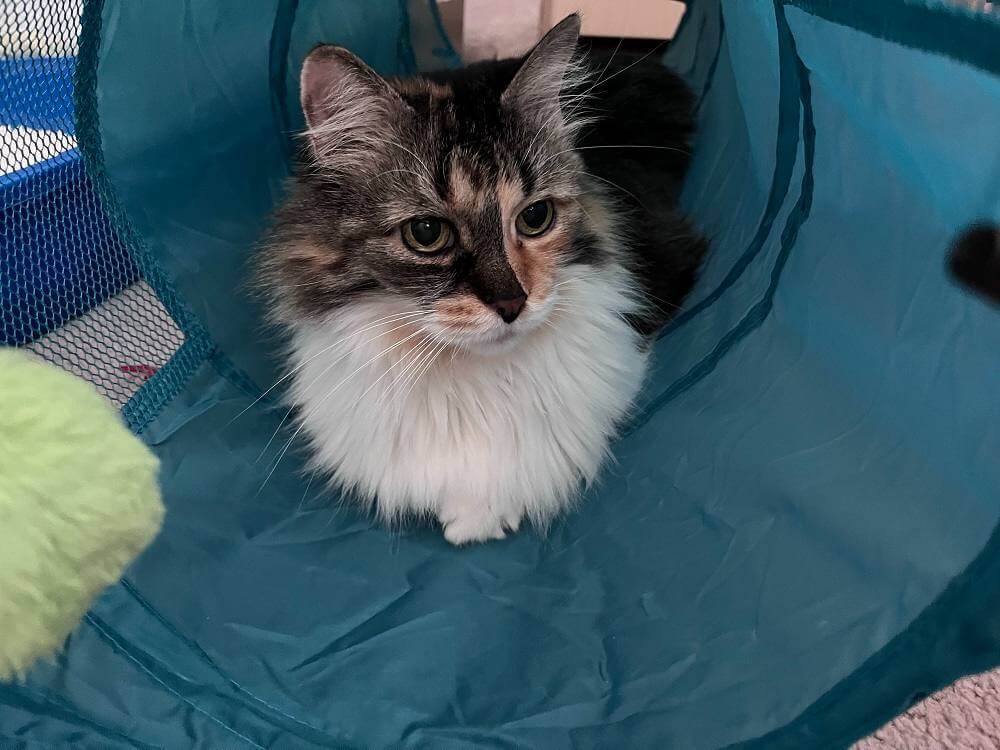
Adding probiotics to your cat’s diet could give their health a boost, especially if they’re prone to stomach upsets. Katelynn Sobus / Cats.com
Probiotics are used to help maintain (or restore) the balance of healthy bacteria in the gut microbiome. Some research has also found that they may have anti-inflammatory and immunoregulatory effects, too.
Probiotics may be helpful for cats with:
- Diarrhea
- Constipation
- Allergies
- Gastrointestinal lymphoma
- Inflammatory bowel disease (IBD)
- Immune problems
- Gum disease (gingivitis) and dental disease
- Stress
- Antibiotic-associated gastrointestinal signs
- Kidney problems
- Liver problems
As we learn more about the importance of gut health to overall health, more research is being conducted in people and animals. The evidence for the use of probiotics in cats is still limited, with some benefits being small. Currently, they are used most widely and successfully in cats with acute or chronic diarrhea, and as a preventative for stress-diarrhea and antibiotic-associated gastrointestinal signs.
However, there is growing interest in how they could benefit a range of conditions, as well as preventing disease in healthy cats. Continue reading to explore how probiotics can help address some of the most common issues I encounter in cats as a veterinarian.
Digestive Health
As a veterinarian, I recommend probiotics most often for cats with digestive issues, like diarrhea, constipation, and chronic gastrointestinal conditions.
Probiotics are a mainstay of the treatment for an acute bout of diarrhea in cats (alongside an easily digestible diet) and have been shown to help them recover more easily. Interestingly, probiotics can also help manage constipation. A study looking at the Effects of probiotics on cats with chronic constipation/megacolon, found a significant improvement.
I use probiotics regularly (alongside traditional treatment) in cats with long-term digestive conditions, such as chronic diarrhea, food allergies, IBD, and even gut cancer. We know these cats have an altered microbiome when compared to healthy cats. A 2012 study looking at the effect of a synbiotic in cats with chronic diarrhea found that 72% of owners saw an improvement in their cat’s diarrhea after just three weeks.
Reducing Side Effects of Antibiotics
Your cat may have been prescribed antibiotics if they have an infection. Antibiotics work by killing harmful bacteria. Unfortunately, they also impact the healthy bacteria in your cat’s gut. This causes dysbiosis (an imbalance) in your cat’s microbiome, commonly resulting in side effects such as vomiting and diarrhea. It can take weeks for your cat’s microbiome to recover.
Giving your cat probiotics alongside antibiotics can help repopulate their gut with friendly bacteria. This helps restore their microbiome and reduces their risk of nasty side effects. In turn, a healthy gut microbiome also boosts your cat’s immune system, helping them fight off infection.
So, if your cat has been prescribed antibiotics, speak to your veterinarian about adding probiotics to their treatment plan.
Oral Health

Probiotics could help reduce pain, inflammation, and bad breath associated with dental disease in cats. Kirsten McCarthy / cats.com
Dental disease is the most common health problem I see in cats. We know that cats with gum and dental disease have an altered oral microbiome compared to healthy cats, with a higher number of harmful bacteria. Several studies have found that treating cats with a range of oral conditions can help.
One such 2023 study looked at the effect of the probiotic Lactobacillus plantarum on cats with stomatitis. Stomatitis is a common, painful inflammation of your cat’s gums and oral soft tissue, often caused by their body’s immune response to plaque on their teeth. In the study, cats treated with the probiotic for just two weeks showed a resolution in mouth ulcers, pain, inflammation, and bad breath.
There is also emerging evidence that giving healthy cats probiotics could prevent gum and dental disease even developing.
Immune Problems
Your cat’s immune system is closely linked to their gut health, with the intestine considered the largest immune organ in the body. Probiotics (in particular Lactobacillus species) have been shown in multiple studies to improve the immune function of the intestine – helping to prevent your cat from getting ill or recover quicker if they do.
Probiotics are likely to be beneficial in cats with weaker immune systems, such as very young or very old cats. They may also be helpful in conditions known to be related to the immune system, such as allergies, autoimmune disease, and some cancers.
Importantly, probiotics should be used with caution if your cat is severely immunocompromised, so, always talk to your vet before starting any new treatments.
Stress
Stress is a common trigger of diarrhea in cats, for instance, during weaning, boarding, traveling, or in a shelter environment. Giving probiotics a few days to weeks before this stress is shown to significantly reduce the likelihood of your cat suffering from stress diarrhea.
While stress affects your cat’s gut, their gut health can also impact how stressed they feel.
Research has shown that supplementing cats with certain probiotics, such as Bifidobacterium longum NCC3001 (BL999), can reduce stress in cats. A paper from Colorado State University evaluated probiotics for calming effects in cats. It found that supplementing cats with BL999 reduced stress and stress-related issues (such as flare-ups of feline herpes virus) – and can even increase social interaction between you and your cat!
You can find BL999 in calming supplements such as Purina Pro Plan Calming Care.
Choosing a Probiotic for Your Cat

In our review of the best probiotics for cats, Purina Proplan Fortiflora Probiotic Supplement for Cats came out top. Sarah Zimerman / Cats.com
You should choose a probiotic that is specifically designed for cats. Probiotics are made up of specific strains of bacteria known to live in different parts of your cat’s body. These strains will differ from those found in other animals or in people, which may not be effective or safe in cats.
Importantly, I would not recommend using human prebiotic foods (such as yoghurt or kefir). Cats have very different bacteria in their gut, so they are unlikely to be effective. But they can also have side effects, such as tummy pain, flatulence, and digestive upsets.
The most common strains of probiotics used in cats are:
- Enterococcus
- Bifidobacterium
- Lactobacillus
- Streptococcus
Different strains colonise different areas of your cat’s body and offer varying benefits. The good news is that most probiotic products are already formulated with a specific use in mind.
We’ve compiled a list of the best probiotics in cats to help. But always talk to your veterinarian about which probiotic would benefit your cat most, especially if they have a health condition. Be sure to choose a product from a trusted brand who have research to back up their claims.
What are the Different Types of Probiotics for Cats?
The right probiotic for your cat will depend on their preferences and health needs.
Some premium cat foods already include probiotics in their formulation, such as those designed for cats with sensitive stomachs. Probiotics are also often given as a long-term or short-term supplement, as a powder, paste, capsule, or chew that you add to their usual food.
How to Use Probiotics for Cats
Probiotic supplements are usually added to your cat’s usual diet. Always follow the instructions on the probiotic you are using, alongside guidance from your vet.
Probiotics take 1-3 days to colonise the gut wall. So, if you’re using them to prevent antibiotic or stress-associated diarrhea, you should begin giving them several days in advance. Give them for the duration of the stressful event or antibiotic course – and it could help for a week or two afterwards. If you’re using probiotics alongside antibiotics, give them at least 4 hours apart. Otherwise, the antibiotic can inactivate the live, friendly bacteria in the probiotic.
For short, uncomplicated bouts of diarrhea, I usually recommend using probiotics until your cat is completely recovered. When using probiotics for long-term conditions, your cat may need to take them for many weeks or months.
Risks of Probiotics for Cats
Probiotics are generally considered safe for cats. Side effects of probiotics can include mild stomach upset, such as vomiting, loose stools, or flatulence. These usually resolve after a few days of a reduced dose, increasing to the full dose once the symptoms have settled down.
However, there are a few instances where probiotics might not be recommended, such as cats who are severely immunocompromised. So, always check with your vet before starting any new treatment, including supplements like probiotics.
-
Bybee, S., Scorza, A., & Lappin. (2011). Effect of the Probiotic Enterococcus faecium SF68 on Presence of Diarrhea in Cats and Dogs Housed in an Animal Shelter. Journal of Veterinary Internal Medicine, 25(4), 856–860. https://doi.org/10.1111/j.1939-1676.2011.0738.x
-
Cvpm, S. W. R. (2022, April 6). Probiotics, prebiotics, synbiotics, and intestinal health of dogs and cats. Today’s Veterinary Practice.
-
Liang, S., Zhong, Y., Wang, J., & Han, B. (2023). Biological functions of lactic acid bacteria and lts research progress in clinical application in canine and feline. Chin. J. Vet. Med, 59, 90-94.
-
Hart, M. L., Suchodolski, J. S., Steiner, J. M., & Webb, C. B. (2012a). Open-label trial of a multi-strain synbiotic in cats with chronic diarrhea. Journal of Feline Medicine and Surgery, 14(4), 240–245. https://doi.org/10.1177/1098612x11434386
-
Hart, M. L., Suchodolski, J. S., Steiner, J. M., & Webb, C. B. (2012b). Open-label trial of a multi-strain synbiotic in cats with chronic diarrhea. Journal of Feline Medicine and Surgery, 14(4), 240–245. https://doi.org/10.1177/1098612x11434386
-
Lappin, M., Smith, K. W., Colorado State University, Davis, H., Franco, P., Gagné, J., Nestlé Purina Research, Nestlé Purina PetCare, & Ragen, T. S. M. (2021). Colorado State University study evaluates probiotic for calming effects in cats. In NUTRITION EXCHANGE.
-
Mäkinen, V., Mäyrä, A., & Munukka, E. (2019). Improving the Health of Teeth in Cats and Dogs with Live Probiotic Bacteria. Journal of Cosmetics Dermatological Sciences and Applications, 09(04), 275–283. https://doi.org/10.4236/jcdsa.2019.94024
-
Rossi, G., Jergens, A., Cerquetella, M., Berardi, S., Di Cicco, E., Bassotti, G., Pengo, G., & Suchodolski, J. (2017). Effects of a probiotic (SLAB51TM) on clinical and histologic variables and microbiota of cats with chronic constipation/megacolon: a pilot study. Beneficial Microbes, 9(1), 101–110. https://doi.org/10.3920/bm2017.0023
-
Schmitz, S. S. (2024). Evidence‐based use of biotics in the management of gastrointestinal disorders in dogs and cats. Veterinary Record, 195(S2), 26–32. https://doi.org/10.1002/vetr.4916
-
Wernimont, S. M., Radosevich, J., Jackson, M. I., Ephraim, E., Badri, D. V., MacLeay, J. M., Jewell, D. E., & Suchodolski, J. S. (2020). The effects of nutrition on the gastrointestinal microbiome of cats and dogs: Impact on health and disease. Frontiers in Microbiology, 11. https://doi.org/10.3389/fmicb.2020.01266
-
Zha, M., Zhu, S., & Chen, Y. (2024). Probiotics and Cat Health: A Review of Progress and Prospects. Microorganisms, 12(6), 1080. https://doi.org/10.3390/microorganisms12061080